
MARVEL SNAP
(NDA PROTECTED)
ROLE
Product Design Intern
SKILLS
Interaction Design
Product Strategy
Prototyping
TIMELINE
3 Months
OVERVIEW
Worked on the user experience of Marvel-SNAP: the first ever fast paced mid-core CCG (collectible card game).
SUMMARY
Collaborated with designers, product managers and engineers to shape strategy, execution and product direction.
CURRENT SPACE
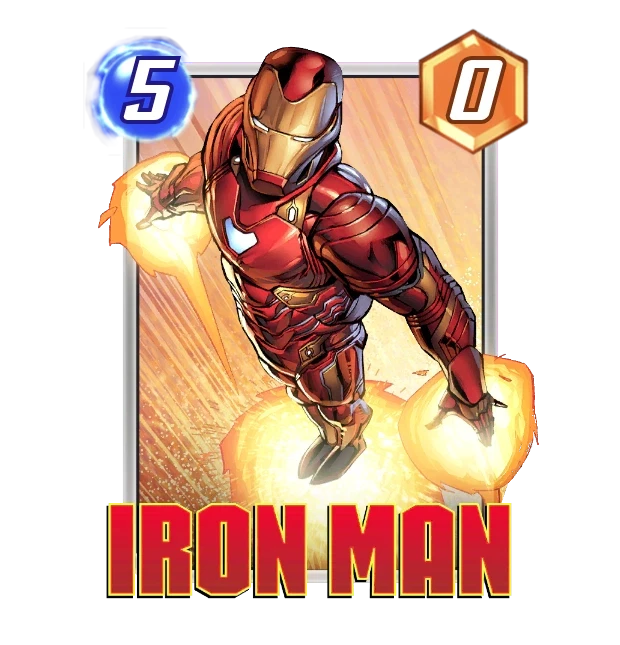
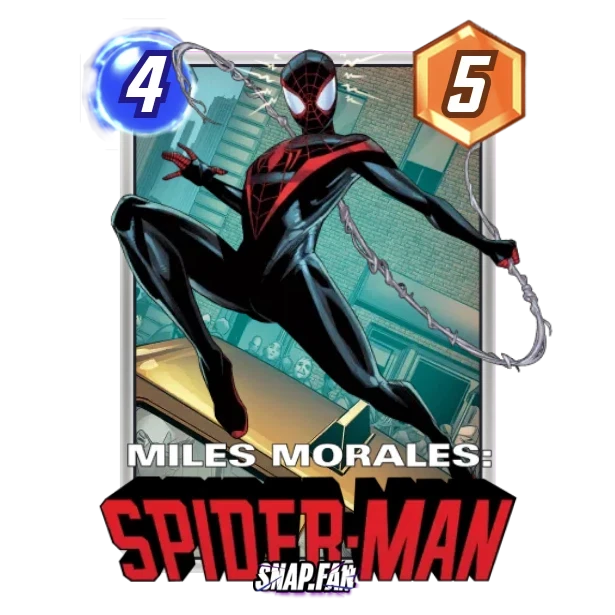
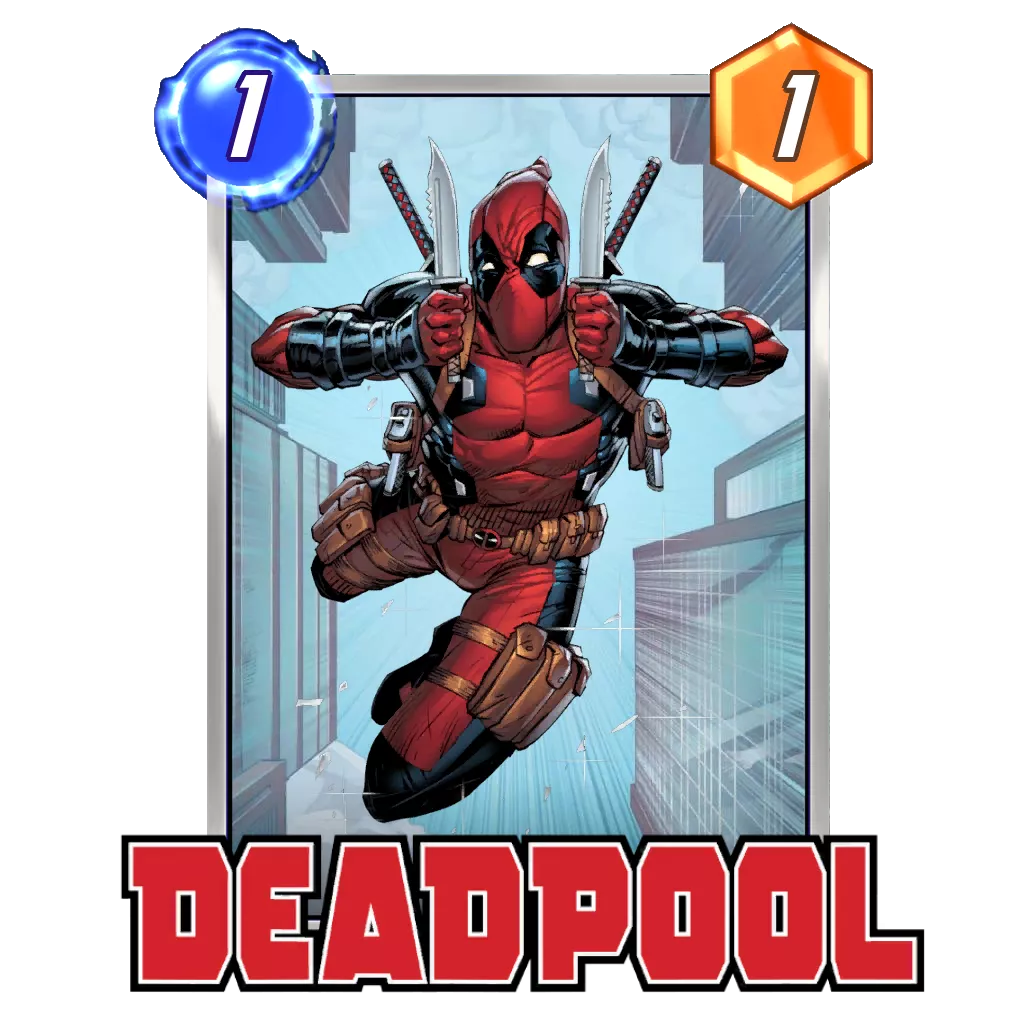
SNAP is one of a kind in the gaming industry.
Other trading card games often use 30–60 card decks, while SNAP's bite-sized play style revolutionized the typical pacing of the game-mode.
PROJECT 01
PROBLEM
Marvel SNAP is a collectible card game, with no way to show off your cards.
HYPOTHESES
Through self expression, SNAP can give more monetary value to cosmetic items, and drive further long term retention.
RESEARCH
To validate the hypothesis, I needed to confirm that identity expression was already an organic behavior.
RESEARCH FINDINGS
High-investment players were:
2x
more likely
to switch profile pictures across decks than
casual users!
Players active for 60+ days were 3x more likely to have a customized profile than newer players.
INSIGHT:
The data suggests that identity expression scales with engagement.
if identity is already a behavior, designing around it could deepen that investment further.
SOLUTIONS
CHANGE #1
CHANGE #2
CHANGE #3
DESIGNING AT LEVERAGE POINTS
Connecting the profile to existing social systems
BEFORE: 1 access point.
There was only currently one way to access SNAP's social system.
HOMEPAGE
ACCESS POINT #1
Alliances
Page
Member List
Alliance
Search
DECISION
POINT
View external
alliance?
User
Profile
Personal
Profile
AFTER: 4 extra access points.
Access the social features from further access points. Rather than adding features, the work focused on small structural shifts that amplified engagement across the broader social system.
ACCESS POINT #1
Alliances
Page
ACCESS POINT #2
End of
Game
ACCESS POINT #3
Profile
Picture
Personal
Profile
Member List
Alliance
Search
View external
alliance?
User
Profile
Personal
Profile
HOMEPAGE
DECISION
POINT
View external
alliance?
User
Profile
Personal
Profile
HOMEPAGE
PROJECT 02
CREATING THE UX FOR A BRAND NEW GAME-MODE.
SUMMARY
Took over a live-ops game mode mid-stream and identified a core UX problem in the existing direction.
BUSINESS PROBLEM
Within 1 week post-events, daily active users declined by ~30%..
Player churn after events reduced monetization windows and weakened long-term retention.
Event End
Daily Active
Users
Timeline
CONSTRAINTS
6-week dev cap for V1 and had to re-use existing assets.
THE BRIEF
A parallel engagement layer as an in-game event to boost return rates.
We introduced a time-limited mode that turns everyday play into shared progress, giving players a reason to return and stay engaged — without altering the main game they already know.
UX PROBLEM
As soon as I took over the previous designer's role mid-stream, I noticed a problem with the initial UX:
CORE GAMEPLAY UI
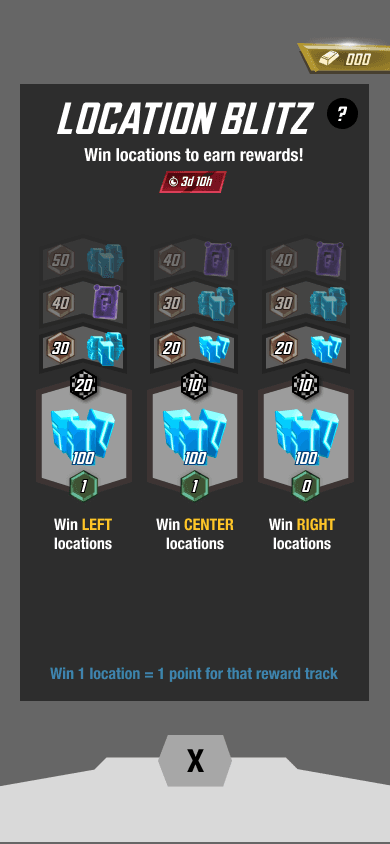
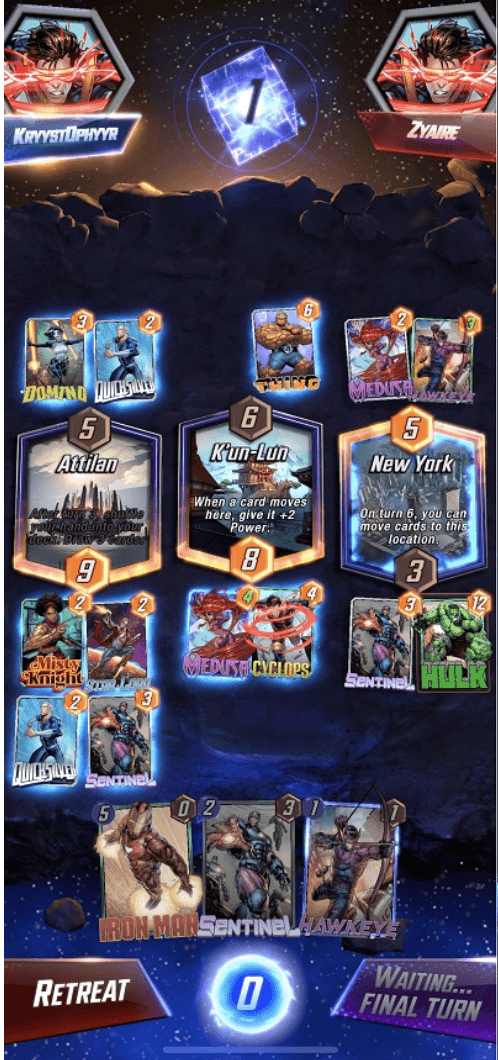
INITIAL UX
INSIGHT
The tiles meant completely different things, but looked the same.
The visual presentation was too similar to the main game-mode, so the messaging was too vague.
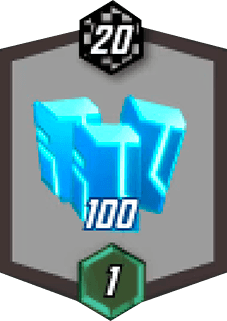


ICONS SYMBOLIZE
"Wins until award"
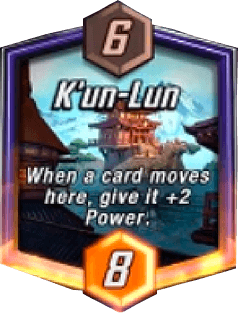


ICONS SYMBOLIZE
"Location Power"
STRUCTURE EXPLORATION
I began by re-doing the layout of the game-mode itself:
LOCATION BLITZ
✕
SINGLE TRACK
Misrepresents event structure
LOCATION BLITZ
Win left locations
Win center locations
Win right locations
✕
HORIZONTAL TRACKS
Wrong messaging; event is not a race
LOCATION BLITZ
3 / 8
✕
BRANCHING PATH
Can't be at different points
INSIGHT
Progress was made when a user "won" at each location in the core-gameplay.
Thus, the layout had to reflect that relationship:
THREE LOCATIONS
=
3/3
000
Location Blitz
?
Win locations to earn rewards!
3d 10h
Next reward in: 2 tracks
30 wins
5,000
30 wins
5,000
40 wins
5,000
20 wins
5,000
20 wins
5,000
20 wins
5,000
10 wins
500
Claim?
500
10 wins
500
✕
THREE COLUMNS
TRADE-OFF #1:
The layout matched the game rules. But the layout didn't show progress:
SOLUTION:
MOVEMENT AS COMMUNICATION
"Conveyor-belt movement" to reinforce awareness of progress, sense of achievement, & joy-pop!
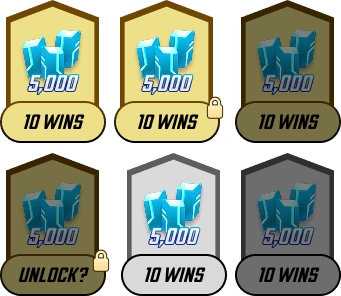
DEFINING TILE STATES
Clarifies whats important to users (claimable, locked, and upcoming rewards)
DESIGN DECISION: REWARD CLAIMING FLOW
When a player earns a reward, should the system force them to claim— or should they claim it themselves?
FORCE-CLAIM FLOW
Guaranteed visibility, but interrupts the game loop.
game ends
→
system force opens
event page
→
LANDS ON “claim award” screen;
USERS FORCED TO
CLAIM
OPTIONAL CLAIM FLOW:
Preserves agency, but risks missed rewards.
game ends
→
USER OPTIONALLY
OPENS EVENT PAGE
→
USER OPTIONALLY CLAIMS BY TAPPING
ON A TILE
INSIGHT
The goal was to reduce churn. Forced claiming interrupts the loop that keeps players coming back.
COMPROMISE
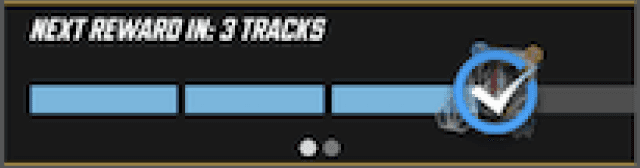
Optional claiming… with a signal players can't miss.
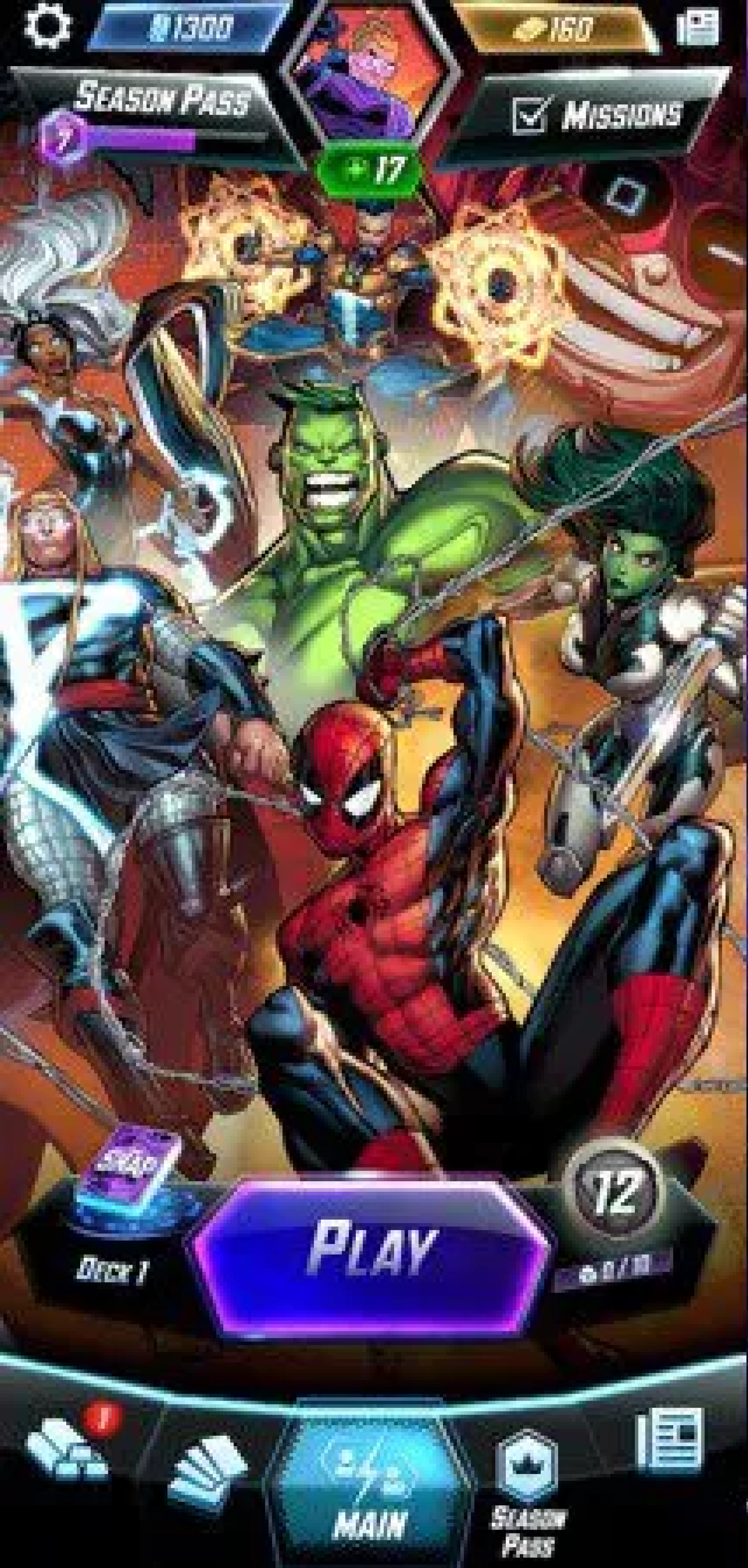
EVENT BADGE
PULL, NOT PUSH.
Doobers draw the player's eye to claimable rewards without leaving the main screen. The player notices and chooses to engage with no interruption.
DESIGN DECISION: PUNCH CARD PROBLEM
Community sentiment declined steadily after switching to a paid card model, since users were accustomed to a free-to-play model.
greedy!
don’t care about us!
money hungry!!
SO WHAT?
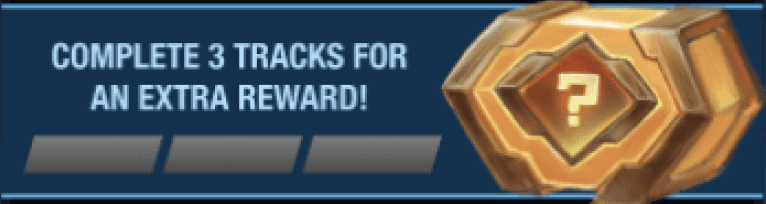
We had to be very careful with how we surfaced the monetized layer. Anything that looked transactional would confirm the narrative.
3/3
000
Location Blitz
?
Win locations to earn rewards!
3d 10h
30 wins
5,000
30 wins
5,000
40 wins
5,000
20 wins
5,000
20 wins
5,000
20 wins
5,000
10 wins
500
Claim?
500
10 wins
500
✕
3/3
000
Location Blitz
?
Win locations to earn rewards!
3d 10h
30 wins
5,000
30 wins
5,000
40 wins
5,000
20 wins
5,000
20 wins
5,000
20 wins
5,000
10 wins
500
Claim?
500
10 wins
500
✕
3/3
000
Location Blitz
?
Win locations to earn rewards!
3d 10h
30 wins
5,000
30 wins
5,000
40 wins
5,000

20 wins
5,000
20 wins
5,000
20 wins
5,000
10 wins
500
Claim?
500
10 wins
500
✕
TRADE-OFFS
Monetization and engagement pulled one direction. Trust pulled the other.
INSIGHT
Revenue is a lagging indicator whilst trust is a leading indicator.
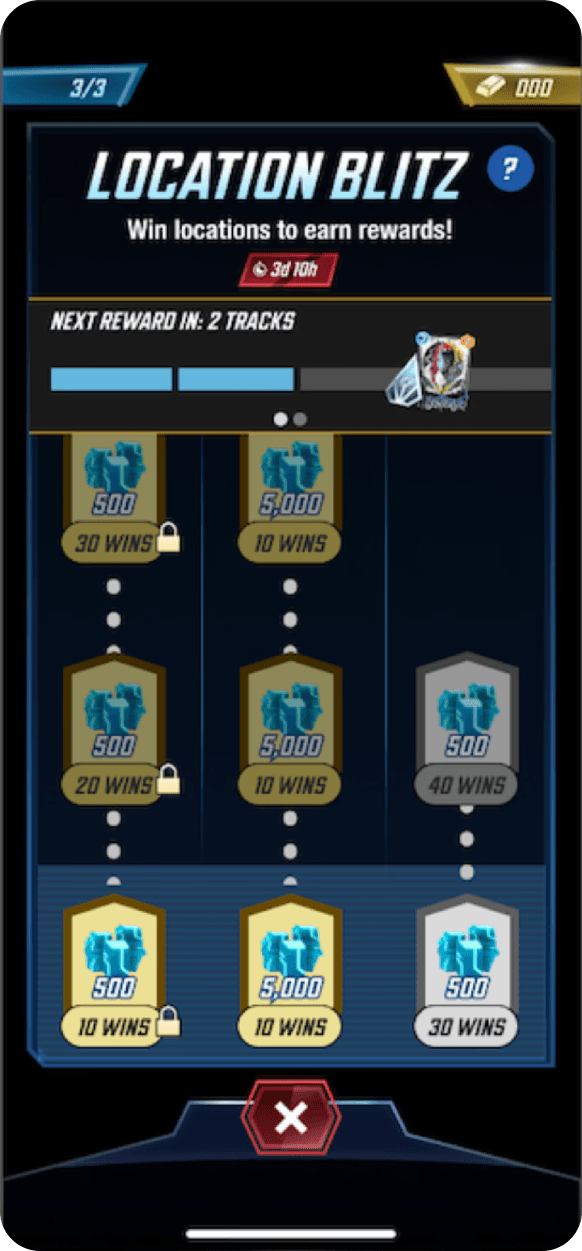
CHOOSING THE USERS!
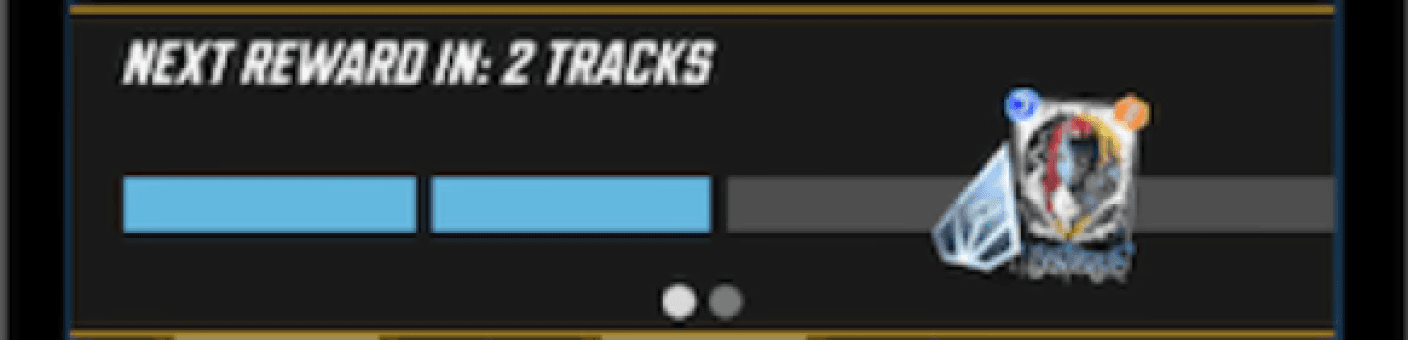
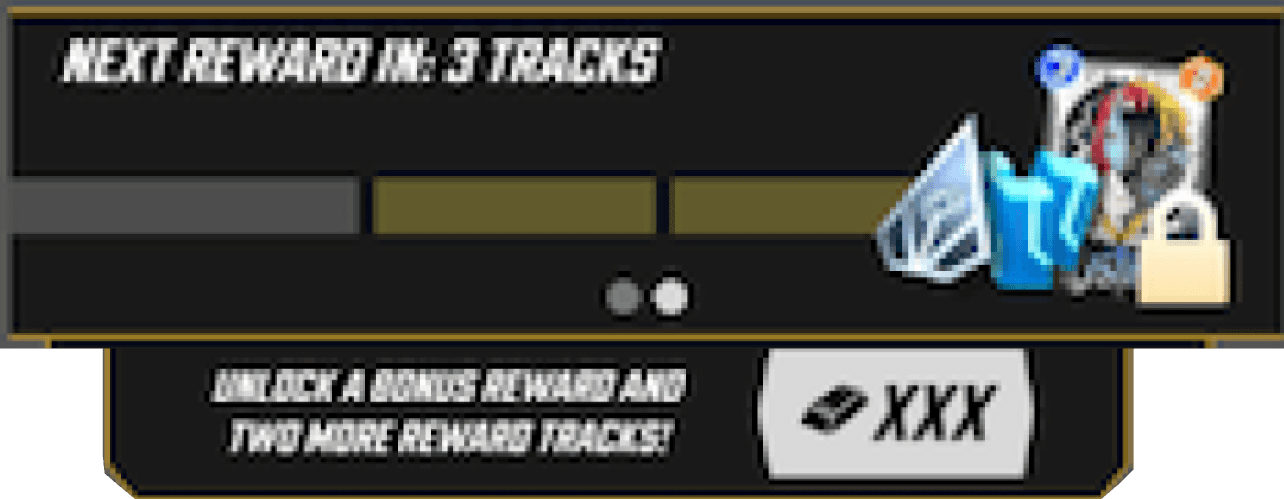
Moving the paid tier behind a swipe
10 WINS



5,000
40 WINS


5,000
5,000
30 WINS
5,000
5,000
20 WINS
5,000
5,000
10 WINS
500
40 WINS

5,000
5,000
30 WINS
5,000
5,000
20 WINS
5,000
5,000
CLAIM?
500
50 WINS

5,000
10 WINS
5,000
40 WINS
5,000
10 WINS
5,000
20 WINS
5,000
10 WINS
5,000
10 WINS
500
→
→
→
USER SWIPES
10 WINS

5,000
40 WINS
5,000
5,000
30 WINS
5,000
5,000
20 WINS
5,000
5,000
10 WINS
500
40 WINS
5,000
5,000
30 WINS
5,000
5,000
20 WINS
5,000
5,000
CLAIM?
500
50 WINS
5,000
10 WINS
5,000
40 WINS
5,000
10 WINS
5,000
20 WINS
5,000
10 WINS
5,000
10 WINS
500
PROJECT 03
FIRST TIME USER EXPERIENCE [FTUE] REVAMP

This work is confidential.
Please email me↗ if you'd like to chat!
REFLECTIONS
Reference existing UX behaviors.
Take more initiative in understanding existing patterns and designs; knowledge compounds.
Jam often and iteratively!
More often than not, your team members (not necessarily a designer either) will have a differing opinion
than you, which helps to broaden your perspectives— and ultimately grow.
Growth is in the gap between the person you are now, and the person you want to be.
Don't look at the next immediate position, but rather, a couple
positions up. Position yourself for the future.